Make Your Old Radiators Work with a Modern Heat Pump
Switching from a gas or oil boiler to a heat pump can feel like a big step, especially if you are looking at a house full of old radiators and wondering if they are up to the job. Many UK homes have a mix of single panel radiators, odd sizes and pipework that has not been touched in years, so it is natural to worry about comfort in a cold, damp winter.
The good news is that a heat pump radiator upgrade does not always mean pulling every radiator off the wall. In many homes, smart design, a few key changes and some careful setup can give you warm rooms, lower carbon heating and a system that simply works. At Eaasy Heat, we focus on designing air source heat pump systems that match your home and your existing emitters, so you get the right balance between comfort, efficiency and budget.
How Heat Pumps and Radiators Actually Heat Your Home
Heat pumps work differently to gas boilers. A boiler often runs at high flow temperatures, so radiators feel very hot to touch when the heating is on. A heat pump works better at lower flow temperatures, so radiators feel warm rather than scorching, but they give off that warmth over longer periods.
Three ideas matter here:
- Design temperature, the flow temperature the system is planned around
- Radiator size and type, how much heat each one can put into a room
- Room heat loss, how quickly each room loses heat through walls, windows and floors
Typical UK homes, from solid wall terraces to 1930s semis and post‑war houses, can all be suitable for heat pumps, but the mix of insulation and radiator sizes can vary a lot. If a radiator is too small for a room at the lower heat pump temperature, you may notice:
- Rooms that never quite feel warm enough on cold days
- The system running for longer to keep up
- Lower efficiency, especially during late autumn and winter cold snaps
When design temperature, radiator output and room heat loss match up, you get steady, gentle heat without the constant on‑off cycling many people are used to with boilers.
Do You Really Need a Heat Pump Radiator Upgrade?
Before changing anything, it helps to look carefully at what is already on the walls. We usually start by checking:
- Age of the radiators and whether they show signs of corrosion or sludge
- Type, single or double panel, with or without fins
- Location, under windows, on internal walls, tucked behind furniture
- Real-world performance, rooms that already struggle in cold weather
If a room is chilly now with a boiler, it is a warning sign that the existing radiator may not be ideal for a lower temperature system.
A room-by-room heat loss survey and radiator output calculation lets us see the full picture. At Eaasy Heat, we use that data to compare different flow temperatures, so we can see how each room would behave and what that might mean for comfort and running patterns.
The typical outcome in many homes is reassuring:
- A fair number of existing radiators can stay as they are
- Key spaces, such as living rooms and north-facing bedrooms, often need upsizing
- In some cases, we recommend fan-assisted emitters or underfloor heating in tricky areas, for example large open-plan spaces
This way, you only invest in upgrades where they actually make a difference.
Smart Strategies to Upgrade Radiators Cost‑Effectively
You do not always need a full radiator refit to enjoy a good heat pump system. There are several smart approaches that keep things cost‑effective and practical.
One simple method is to upsize just a few critical radiators. These are usually in:
- The main living area where you spend most time
- Large or open-plan kitchen-diners
- North or east-facing bedrooms that feel colder
Another option is adding an extra radiator in a large room. Spreading the heat across two emitters can give better comfort without giant units taking up whole walls. If radiators are very old or sludged, we may suggest replacing those as a priority, as tired units can hold back the whole system.
Modern compact radiators can give more output in a smaller footprint, thanks to better design and internal fins. That helps in homes where wall space is already tight. Thermostatic radiator valves, or TRVs, also help you trim temperatures in less used rooms, keep bedrooms slightly cooler and fine tune comfort without constant fiddling with the main controls.
Heat loss is not only about radiators. Improving loft insulation, adding cavity wall insulation where possible and simple draught-proofing can all lower the amount of heat each room needs. With lower heat loss, fewer radiators need to be changed, and the heat pump can run at a gentler flow temperature.
Design Choices That Keep You Warm in Winter
The way the whole system is designed has a big impact on how warm your home feels in the depths of winter. Flow temperature is a key setting. Too high, and the heat pump works harder than it needs to. Too low, and rooms may not quite get there on the coldest days.
Weather compensation controls can help here. They adjust the flow temperature based on the outdoor temperature, so the system naturally works a bit harder when it is cold and eases off when it is milder. Zoning can also be useful, for example treating bedrooms and living areas as separate zones, so you are not heating all spaces in the same way.
Good hydraulic design matters too:
- Correct pump speeds, so water moves at the right rate around the system
- Careful flow balancing, so every radiator gets its fair share of hot water
- Thoughtful pipe routes in extended or multi-storey homes
Seasonal commissioning is the final piece. We like to fine tune systems in early heating-season, adjusting flow temperatures, TRVs and timing so that when the coldest weeks arrive, everything is already working smoothly.
What to Expect During a Radiator and Heat Pump Install
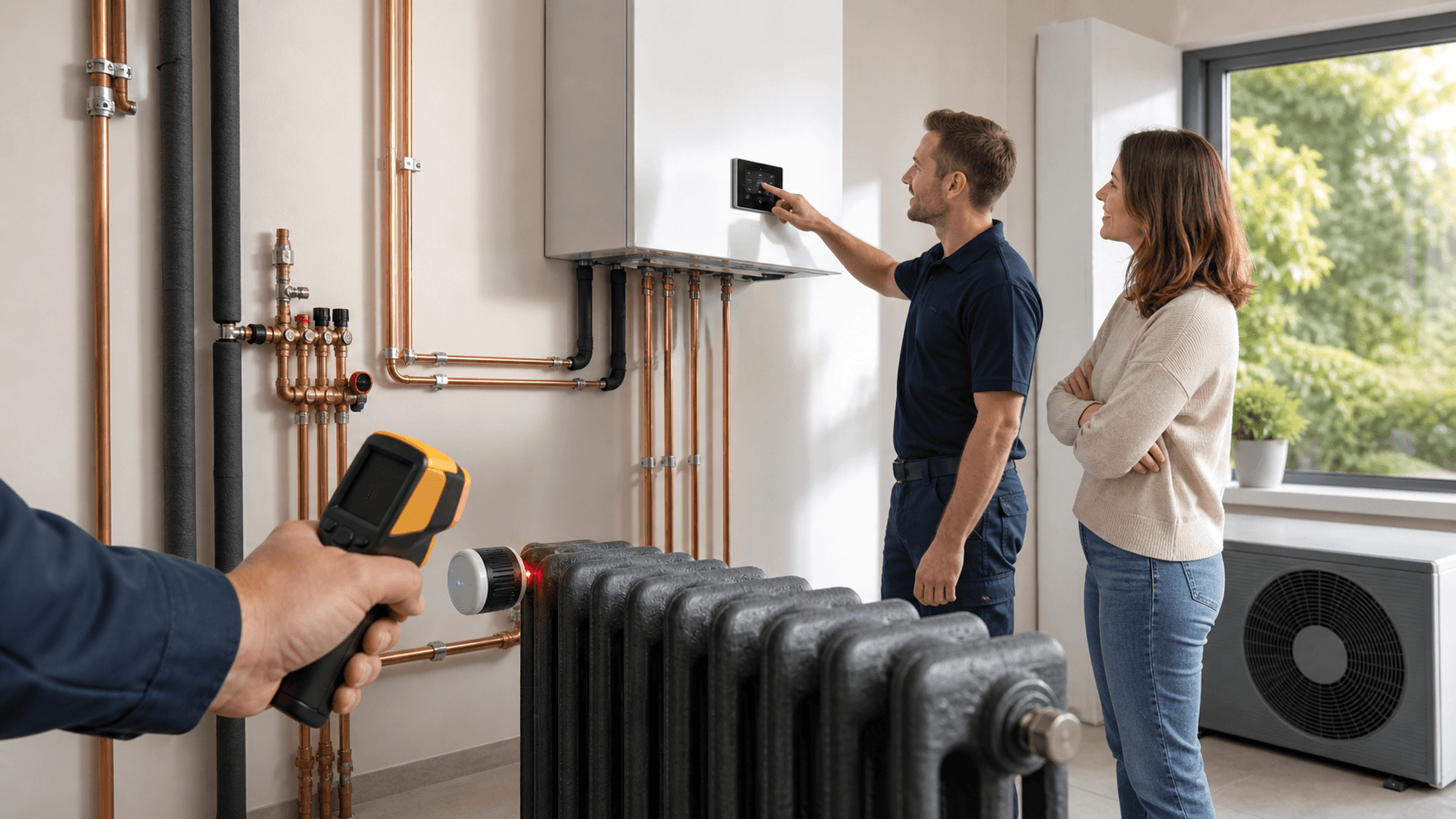
When you pair a new heat pump with radiator changes, the process usually follows a clear path. It starts with a detailed survey, including the heat loss work and checks of your current pipework and emitters. From there, we design the system, select the heat pump unit, cylinder if needed and decide which radiators need changing or adding.
Installation is then planned in a sensible sequence. Often, radiator and pipework changes come first, followed by the heat pump unit and controls. Some rooms may be out of use for short periods while radiators are swapped and pipework adjusted, but careful planning helps keep disruption down. We aim to protect floors, keep mess under control and coordinate any electrical work neatly.
Once everything is in place, commissioning begins. This includes filling and flushing the system, setting initial flow temperatures, balancing radiators and checking that every room is warming up as expected. We also go through the controls with you, explain how the heat pump feels different day-to-day compared with a boiler, and what normal behaviour looks like, such as longer, quieter run times. Follow-up visits give a chance to tweak radiator settings, timings and schedules once you have lived with the system for a bit.
Take the Next Step Towards a Warmer, Lower‑Carbon Home
Planning a heat pump radiator upgrade works especially well outside the main heating season, because your home does not rely on the heating every day and there is more room to adjust and test. It is also a good chance to think about small insulation improvements at the same time so the new system starts off with the best conditions.
At Eaasy Heat, we help UK homeowners understand what their existing radiators can do, where changes will have the most impact and how to match a new air source heat pump to the way they actually live. A helpful first step is to gather a few recent energy bills, make a note of any rooms that are always too hot, too cold or slow to heat, and think about the comfort level you want through winter. That gives a clear starting point for shaping a system that feels familiar, but runs cleaner and more efficiently for years to come.
Get Started With Your Project Today
If you are considering upgrading your system, we can assess your property and recommend the most efficient heat pump radiator upgrade for your home. At Eaasy Heat, we handle everything from initial advice to professional installation so you can enjoy reliable, comfortable heating with lower running costs. To discuss your plans or arrange a quotation, simply contact us and we will be in touch promptly.