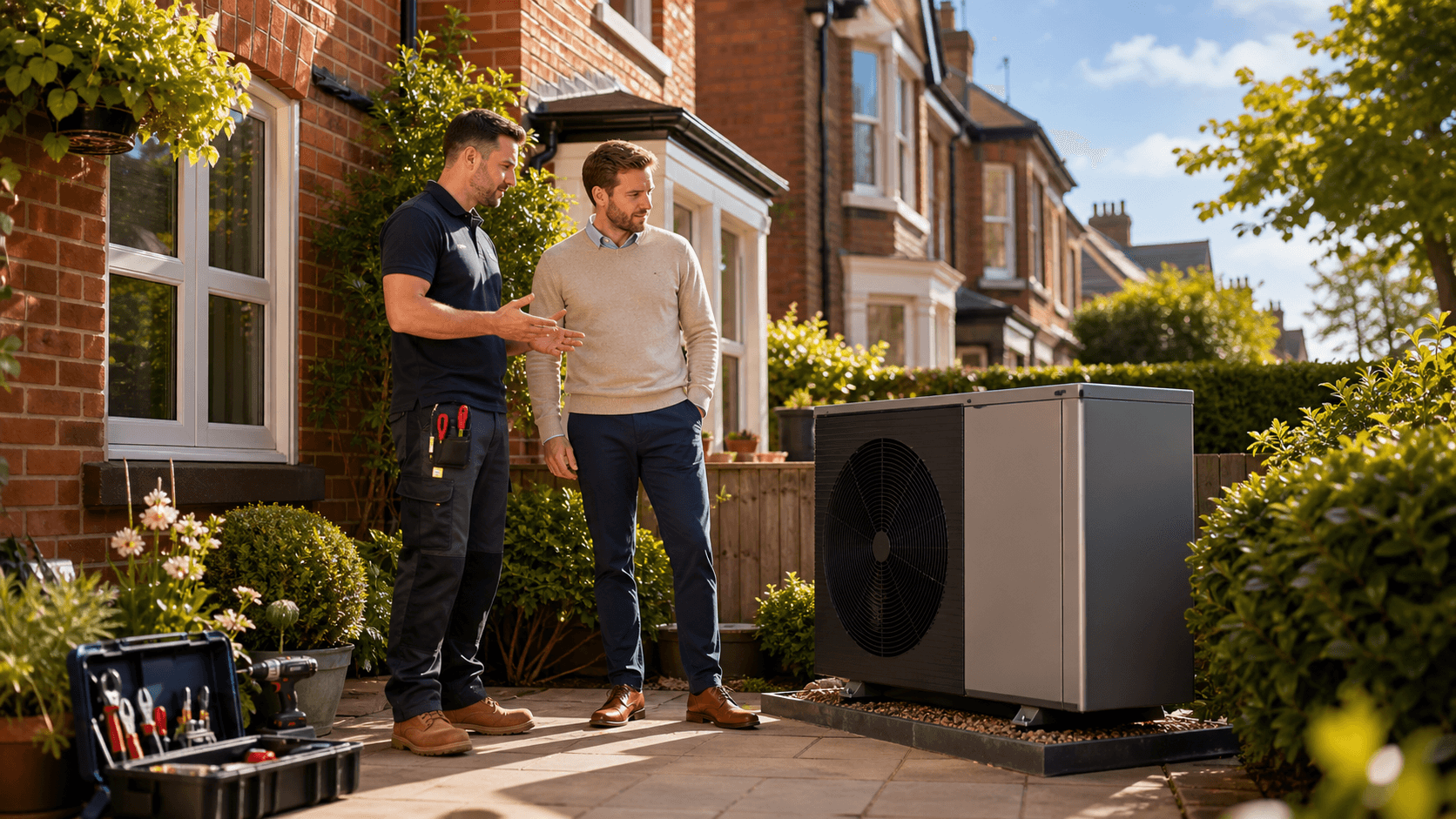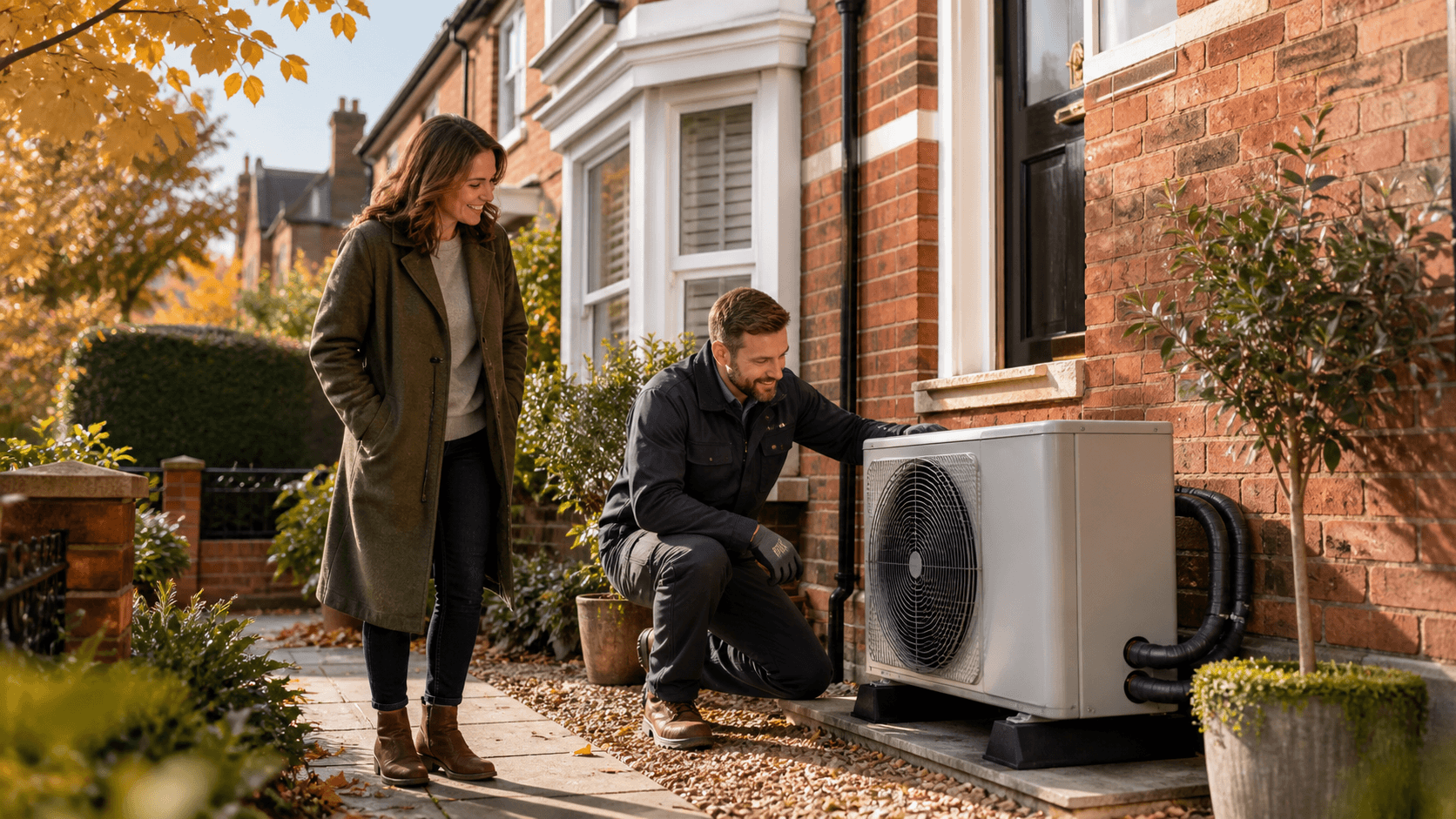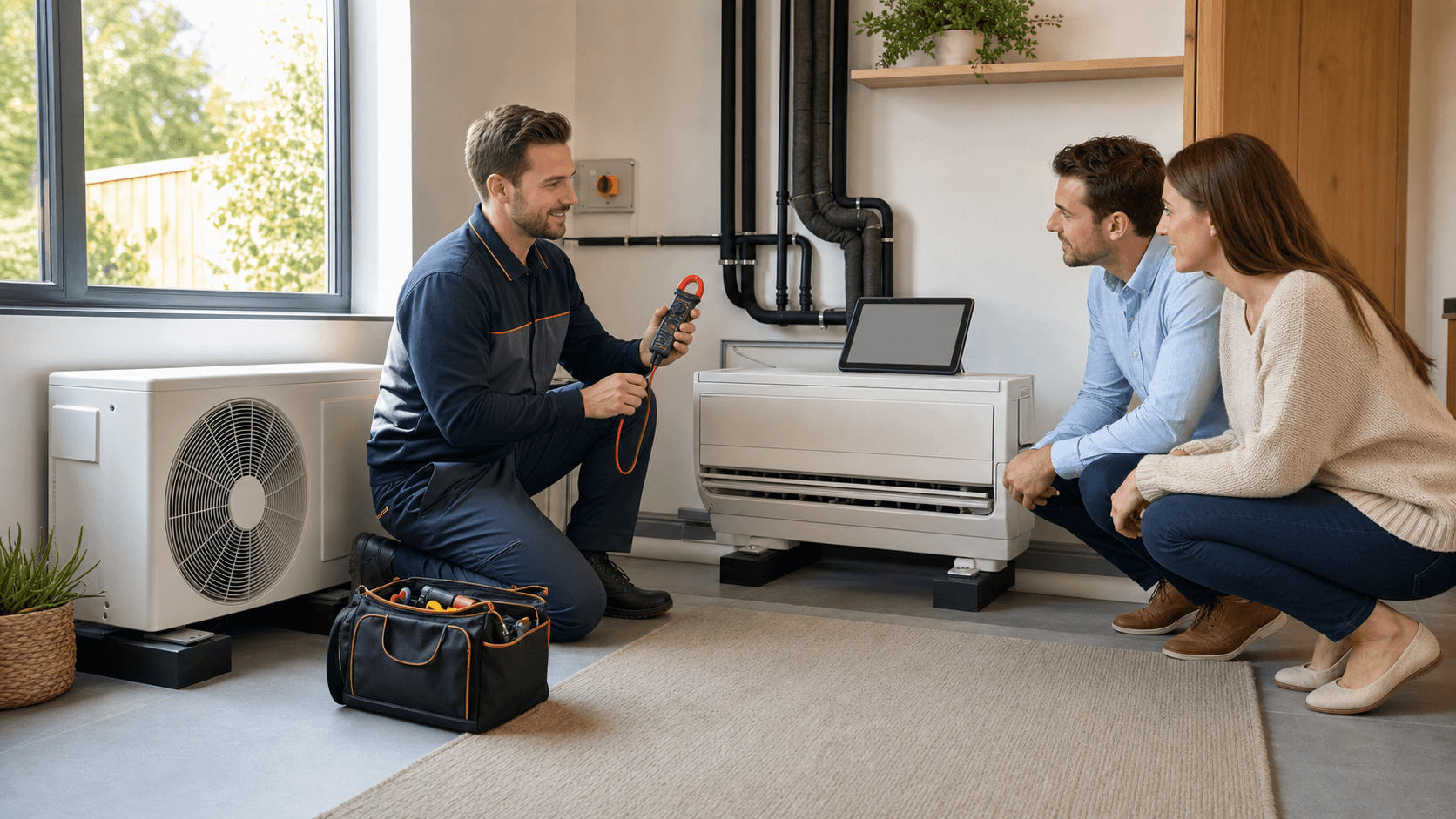
Cooler Homes Without Compromise
UK homes are great at holding on to heat, which helps in winter but feels awful when a hot spell arrives and the house never seems to cool down. Many homeowners now want a way to stay comfortable in summer without sending energy use or carbon impact through the roof. That is where a residential air source heat pump starts to look very attractive.
Modern systems can often cool as well as heat, using the same outdoor unit. They do not behave exactly like traditional AC, though. The comfort feel, speed and strength of cooling can be quite different. At Eaasy Heat, we help people understand what heat pump cooling can realistically do in a UK home, and when something closer to classic AC might still be needed in certain rooms.
How Heat Pumps Cool Your Home
An air source heat pump is like a reversible fridge. In winter it takes low‑grade heat from outside air and moves it indoors. In summer, when set up for cooling, it flips that process and moves heat out of your home instead.
There are two broad ways cooling can work:
- Full active cooling, where the system sends chilled water to emitters like underfloor loops or fan‑coil units, or delivers cool air through air‑to‑air units
- Softer, weather‑responsive operation, where the system is managed in a way that avoids unwanted heat build‑up without delivering strong, icy air
When we talk about a residential air source heat pump, we are usually thinking about:
- Air‑to‑water systems, which feed radiators or underfloor heating circuits
- Air‑to‑air systems, which blow conditioned air directly into rooms, and look more like familiar AC units on the wall or ceiling
Air‑to‑air feels the most like standard AC, as you get direct cool airflow. Air‑to‑water can still cool, but the way it feels in the room depends heavily on the type of emitters and how the system is designed.
Heat Pump Cooling vs Proper Air Con
Traditional split AC is built with one clear target: fast, strong cooling. Heat pumps in UK homes are normally designed first for winter heating, with cooling as a helpful bonus.
In day‑to‑day comfort terms, that means:
- Heat pumps often give a gentle, steady indoor temperature rather than that sudden blast of icy air
- The aim is to keep rooms in a comfortable band, not to make them feel like a cold hotel lobby
Cooling power and response time also differ. Because most systems are sized around winter heat demand, peak cooling output can be more modest. If a room has been allowed to get very hot, it may take a while to pull the temperature down.
Noise and airflow are another point of difference:
- Many heat pump setups, especially with underfloor cooling or fan‑coil units on low speed, feel calmer and quieter
- Traditional AC can bring obvious fan noise and strong draughts, which some people like and others find tiring
So it is less about better or worse, and more about which type of comfort you prefer and what your home actually needs.
What You Can Expect in a Typical UK Home
For most UK homes with a well-designed residential air source heat pump, aiming for indoor summer temperatures around 23 to 25°C is realistic. The goal is to avoid that stuffy, sticky feeling and keep rooms consistently comfortable during warm spells, rather than chasing very low set points.
What you already have inside the house matters a lot:
- Traditional radiators: usually not ideal for active cooling, as they are sized and located for heating and can risk condensation if run too cold
- Underfloor heating: often a good match for gentle cooling, as it spreads coolth evenly and avoids draughts
- Fan‑coil units: can give more direct, noticeable cooling, similar to AC but still linked to the heat pump
The building itself also plays a big role. Good insulation, reasonable glazing, shading on sunny windows and sensible ventilation all help your heat pump do its job. Without these, the system is working against strong solar gain and internal heat from cooking, showers, people and electrical kit.
Simple house features that improve cooling performance include:
- Shading or blinds on large south or west‑facing windows
- Light‑coloured finishes outside that reflect rather than absorb heat
- Thoughtful night‑time ventilation if outdoor air is cooler than indoors
When the building works with the system, the comfort difference can be very noticeable.
Costs, Efficiency and Running Your System Smartly
A well-set-up residential air source heat pump can cool very efficiently, especially if you are not trying to keep the house at very low temperatures. It is generally far more efficient than relying on multiple plug‑in units or portable AC scattered around the home.
To keep running costs in check, it helps to:
- Choose sensible set points, so the system does not run flat out chasing an extreme target
- Use smart controls or schedules to pre‑cool slightly before the hottest part of the day
- Avoid constant fiddling with settings, which can cause short cycling and wasted energy
Where time-of-use tariffs are available, you can often:
- Pre‑cool a bit in cheaper periods so the system can work less hard at peak times
- Let the home temperature gently float within a comfort range instead of holding a rigid number
Basic maintenance makes a big difference to both heating and cooling modes. That means keeping filters clean on indoor units, making sure condensate drains are clear and checking there is good airflow around the outdoor unit. Professional servicing keeps everything working reliably through summer and ready for the colder months that follow.
When Cooling From a Heat Pump Is Not Enough
There are limits to what any system can do in tough conditions. During very hot spells above 30°C, especially in older, poorly insulated, south‑facing properties, a heat pump may still leave rooms feeling warm, even though it is working hard.
Some spaces are especially tricky:
- Loft conversions with minimal shading and lots of sun on the roof
- Big glazed extensions with wide bi‑fold doors
- Home offices packed with computers and screens
In these cases, it may be worth thinking about upgrades to the building fabric, changes to emitters or a hybrid approach that adds more AC‑like cooling to specific problem rooms. A professional heat loss and heat gain survey can highlight where improvements will have the biggest impact and how to integrate cooling into a whole‑home plan.
Thinking ahead, rather than waiting for the next heatwave, gives you more options. A carefully designed system can balance low‑carbon heating in winter with meaningful, sensible cooling in summer, making your home more comfortable all year round.
Get Started With Your Project Today
If you are ready to upgrade your home's heating, we can help you choose and install the right residential air source heat pump for your property. At Eaasy Heat, we take the time to understand your home, your budget and your comfort needs before recommending a solution. Speak with our team to discuss your options and get a clear, no-obligation quotation, or simply contact us to book an initial consultation.