Build Your Dream Extension with Future-Proof Heating
Planning a new kitchen, loft conversion, or big open-plan family space usually starts with mood boards, layouts, and finishes. It is easy to think about worktops and roof lights first, and leave heating as something to sort out later. That is where problems often creep in, like rooms that are hard to heat or energy bills that climb higher than expected.
A domestic heat pump installation works best when it is at the heart of the plan, not squeezed in at the end. Treating the heat pump as the low carbon backbone of your extension means less disruption, smoother planning, and a home that feels comfortable all year round. It also lines your house up for stricter energy standards and changing heating rules in the future.
When heating is built into the design from day one, it is easier to plan pipework, choose the right radiators or underfloor heating, and keep the whole home balanced. That is exactly the kind of joined-up approach we focus on at Eaasy Heat, where we design and install energy-efficient domestic heat pump systems for homeowners across the West Midlands.
Why Extensions Are the Perfect Time to Go Low Carbon
An extension is already a big rethink of how your home works. Walls move, services get rerouted and you may be improving insulation or windows anyway. This is the ideal moment to step back and think about how the whole home is heated, not just the new bit.
Linking your project with a domestic heat pump installation can bring several long term benefits:
- You are already opening floors and walls, so upgrades cause less extra mess
- You can plan a single, tidy system rather than a patchwork of add-ons
- Your new space can be built to higher energy standards from the start
- You can improve the overall energy rating of your home
Working from a blank sheet in the new area makes smart choices easier. You can:
- Choose underfloor heating in the extension, which works very well at the lower water temperatures used by heat pumps
- Pick radiator sizes that match the new system, instead of trying to reuse tiny old panels
- Add better insulation and high-performance glazing while building regulations are already being checked
When the extension is tied in properly, the new and old parts of the house feel like one home, with even temperatures and a single, efficient heat source working quietly in the background.
Designing Your Extension Around Smart Heat Pump Heating
Early design choices have a big impact on how well a heat pump will perform. Room sizes, window positions, glazing type and insulation levels all change how much heat your home loses. That, in turn, affects the size of heat pump you need and how comfortable the space feels on the coldest days.
A good heating design will sit alongside your architect's drawings, not come after them. For example:
- Large areas of glass look great, but you may need better glazing or different emitters to keep the room warm
- High ceilings can make spaces feel airy, but they change how heat is distributed
- Extra insulation in walls, roof and floor can allow a smaller, more efficient heat pump
It also pays to think about the emitters from day one. Heat pumps work best with:
- Low-temperature radiators that have more surface area
- Underfloor heating, especially in new ground floor extensions
- Smart zoning, so you can control the extension and existing house together or separately
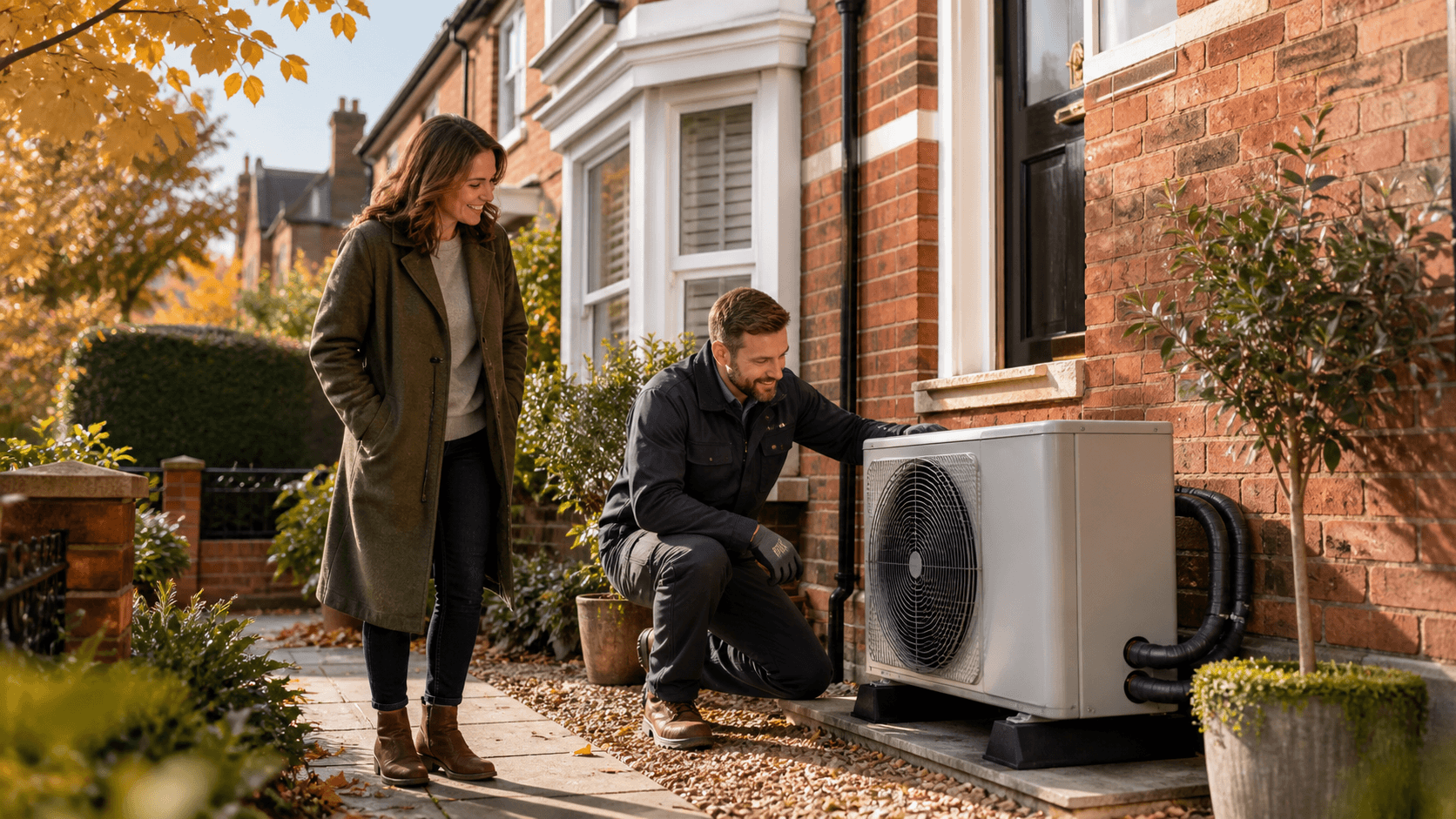
Practical details matter too. The outdoor unit needs good airflow and should be positioned with care for both performance and noise, for you and your neighbours. Routes for pipework and wiring should be planned so they do not cut through finished rooms later. Space for a hot water cylinder and controls should be allowed for in a cupboard or utility area, without stealing the best bits of the new living space.
Key Steps in a Hassle-Free Domestic Heat Pump Installation
When a domestic heat pump installation is tied to an extension, timing and communication are key. At Eaasy Heat, we follow a clear, staged approach so everything lines up with your build.
A typical process includes:
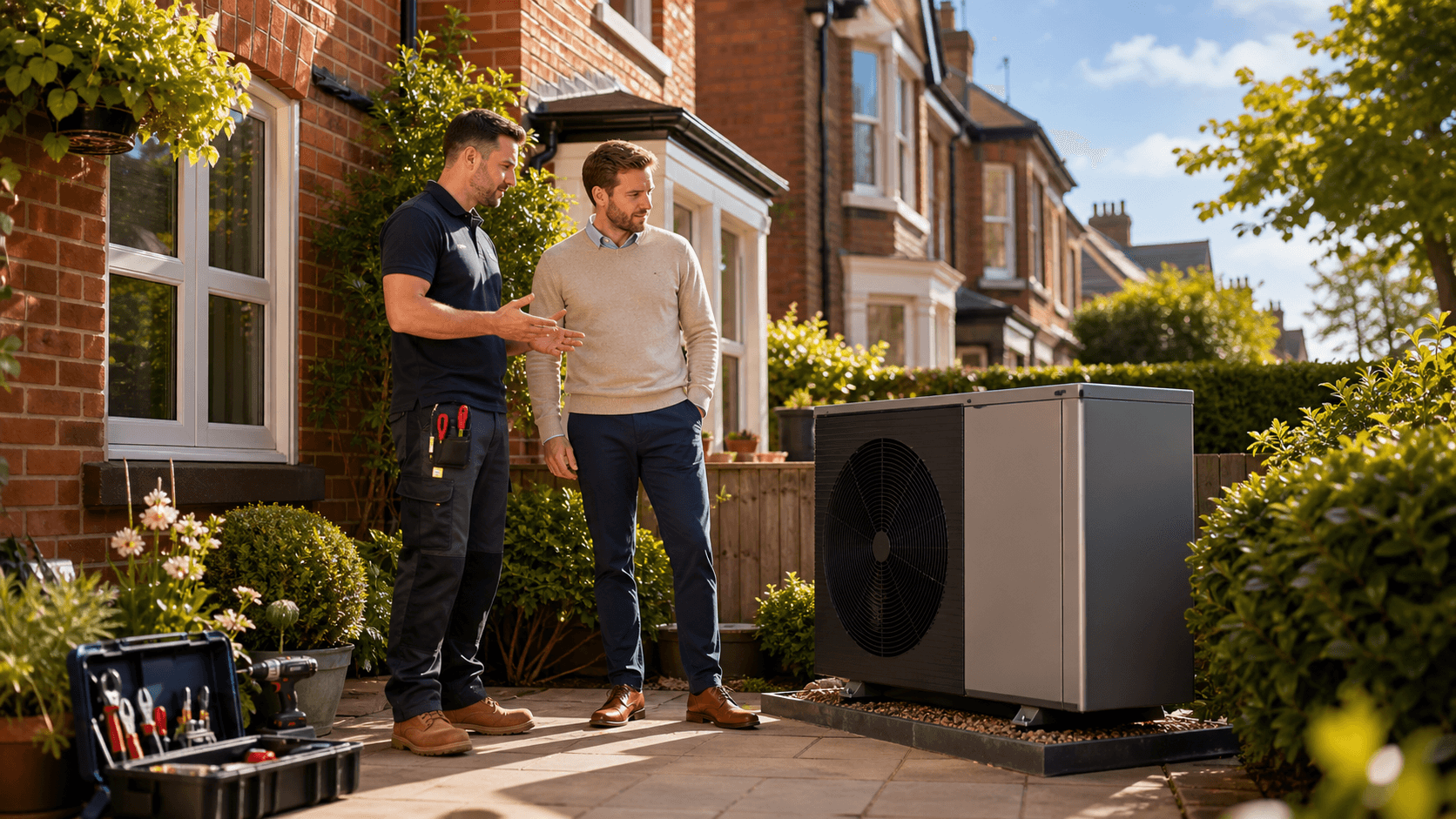
- Initial chat to understand your plans and how you use your home
- Detailed heat loss survey of the existing house and the planned extension
- System design, including heat pump size, emitter choices and cylinder location
- Clear proposal, so you and your builder know what is happening when
- Installation that fits around key build stages like first fix and second fix
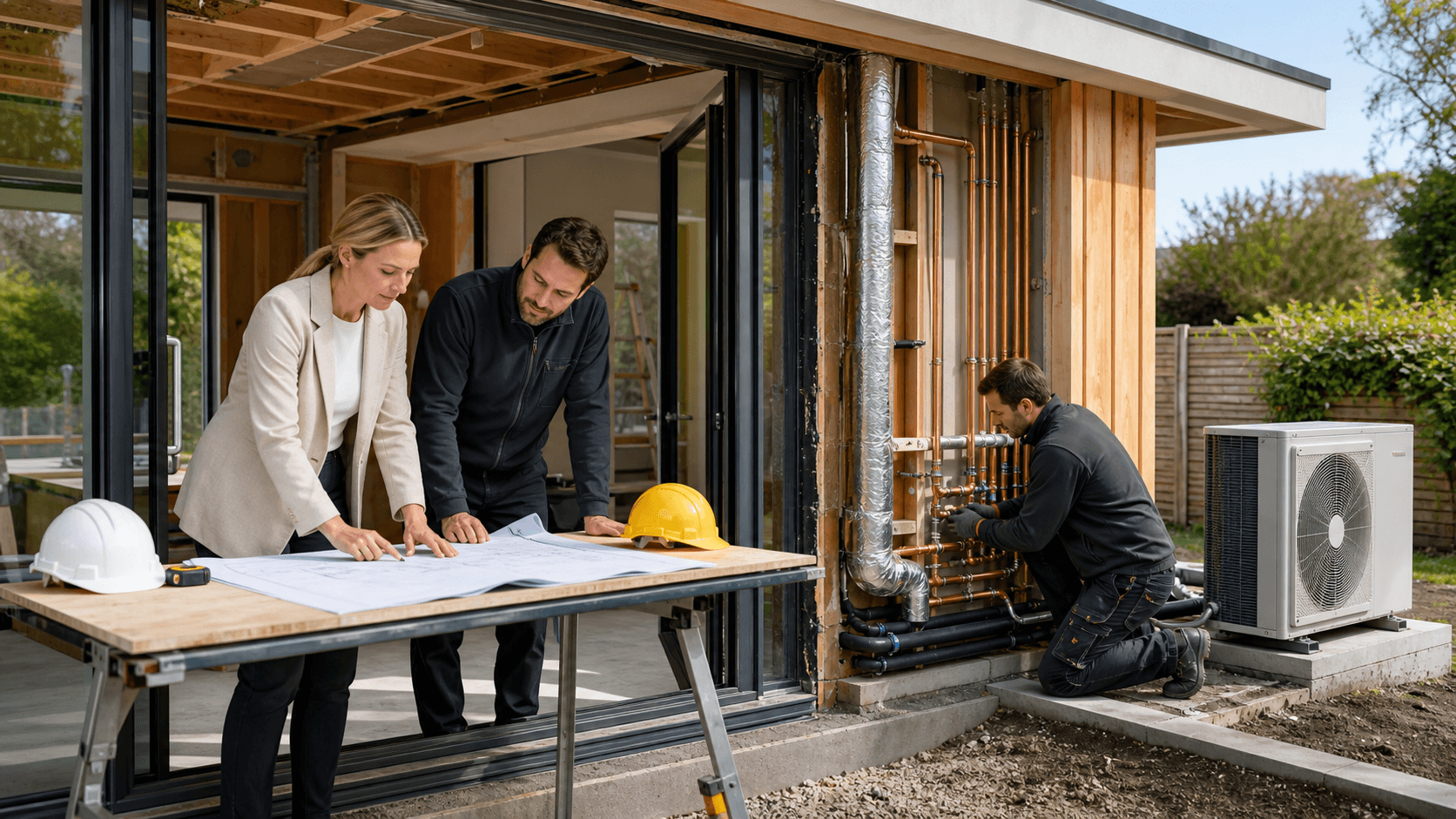
Good coordination between your architect, builder and heat pump installer helps to avoid clashes and rework. For example, pipe routes can be agreed before floors are poured, and the outdoor unit base can be allowed for in groundwork.
Once the system is installed, commissioning and handover are just as important as the build itself. This includes:
- Testing the full system, including radiators or underfloor loops
- Setting up the controls and smart features so they are simple to use
- Talking you through how your new heating works and what to expect
- Fine-tuning the system so the whole home is comfortable by the time colder weather arrives
Avoid Common Pitfalls When Adding a Heat Pump to an Extension
One of the biggest mistakes is designing the extension first, then trying to squeeze heating in at the end. This can lead to awkward radiator locations, pipework on show, or a heat pump that is too big or too small for the final layout.
Other common issues include:
- Not improving insulation in the existing house when the new part is very efficient
- Keeping very small old radiators that do not suit low temperature heating
- Forgetting to check electrical capacity early in the project
- Putting the outdoor unit where noise or airflow could be a problem for neighbours
All of these can be avoided by bringing a specialist into the conversation early. At Eaasy Heat, we can look at your current boiler and radiators, explain what can stay, what should be upgraded and how work can be phased. That way, you stay warm while the project is underway and end up with a joined-up system rather than a half-modern, half-old setup.
Make Your New Space Ready for the Next Decade and Beyond
If you are planning an extension, the best time to think about a domestic heat pump installation is before drawings are final and before the builder starts on site. Using the warmer months to organise surveys, design and permissions means your heating will be ready long before you need it.
By planning ahead, you gain:
- Lower carbon emissions from day one of living in your new space
- Steady, even comfort instead of hot and cold patches
- Quiet, modern heating that fits the feel of a newly improved home
- Better alignment with future energy tariffs and home energy systems
At Eaasy Heat, based in the West Midlands, we work with homeowners who are extending or renovating and want a cleaner way to heat their homes. We provide tailored advice, site visits and clear, step-by-step proposals so your new extension and your heating plan grow together as one well designed project.
Get Started With Your Project Today
If you are ready to make your home more efficient and comfortable, our team at Eaasy Heat is here to help you choose the right solution. Explore our domestic heat pump installation service to see how we can tailor a system to your property. If you would like personalised advice or a quotation, simply contact us and we will guide you through the next steps.