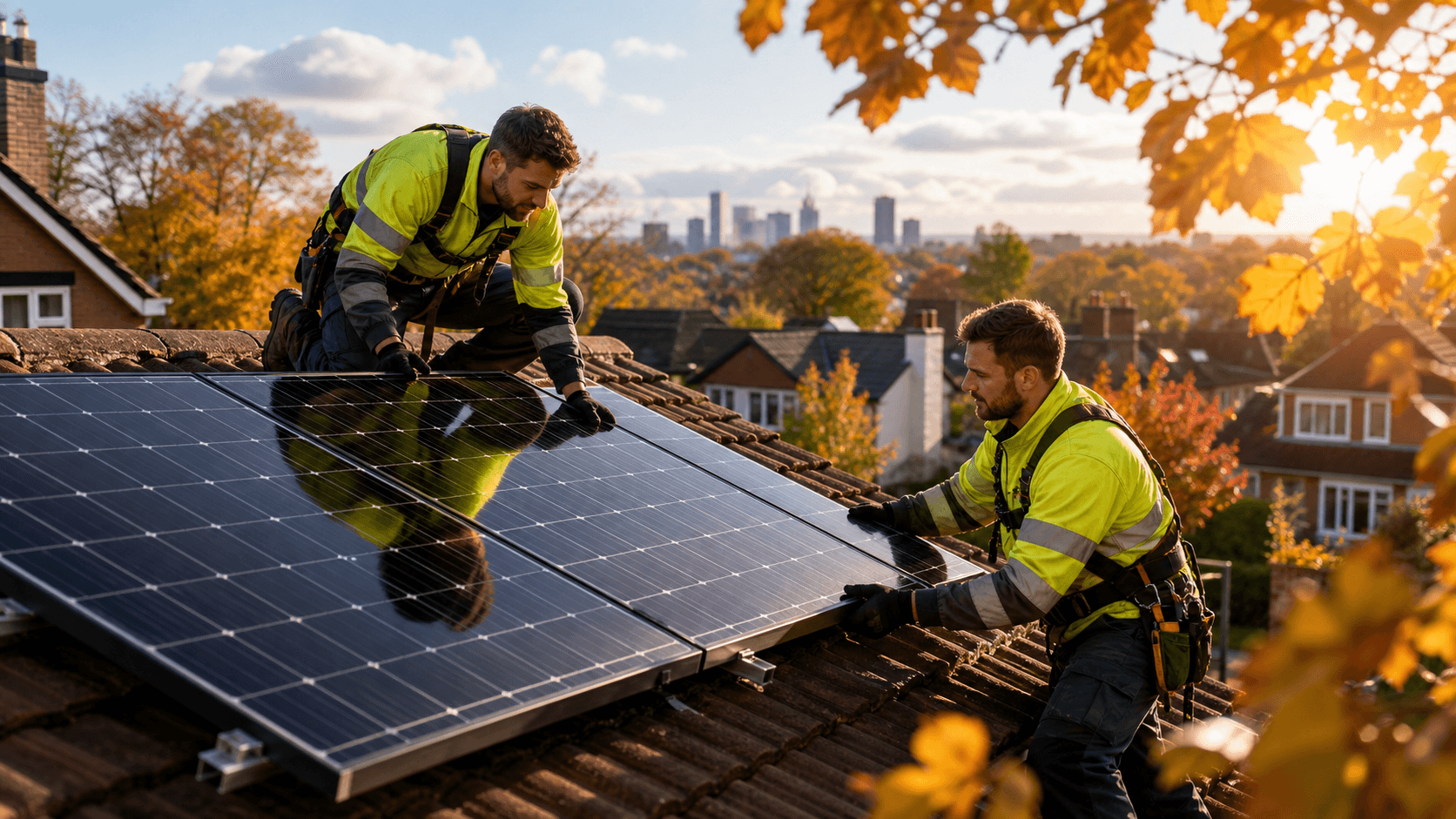
Solar panels are not only worth installing in summer. If you are considering solar panel installation in Birmingham, an autumn installation can begin producing electricity as soon as your system is commissioned, using the daylight available through the season.
Early autumn is also a sensible time to plan ahead. Shorter days, cooler temperatures and greater electricity use at home can make reducing your reliance on the grid feel more important. We design each system around your roof, energy habits and future plans, so you can make a well-informed choice rather than wait for "perfect" weather.
Generate More Power From Birmingham's Autumn Sun
Autumn sunlight may feel less intense than summer sunshine, but your panels can still generate electricity throughout the day. Solar technology works whenever daylight reaches the panels, meaning you do not need to wait until next spring to start seeing generation from your new system.
Installing before winter also gives you time to get comfortable with how your system works. You can see when your household uses the most electricity and how solar generation fits into your daily routine.
At Eaasy Heat, we serve the West Midlands. Our approach is based on the details of your home, not a standard package that may not suit your roof or usage.
Why Solar Panel Installation in Birmingham Pays Off Before Winter
Electricity use often rises during the colder months. Lights stay on for longer, cooking and laundry continue as normal, and heating controls may be working harder. A solar system will not produce the same amount in winter as it does during brighter months, but it can still offset some of your daytime electricity use.
Having the system in place before winter means you can begin generating straight away. It also means you are ready for the longer, brighter days that arrive in spring and summer, instead of waiting until then to start the installation process.
A professionally planned system supports year-round energy use rather than focusing only on the sunniest weeks. We look at how your household uses power so the design works for everyday life, including the seasons when you may need electricity most.
Solar can help reduce grid reliance across the year by supporting daytime use such as:
- Running appliances while you are at home
- Powering lighting and kitchen equipment
- Supporting home-working equipment
- Charging compatible battery storage for later use
Winter Weather Does Not Stop Solar Generation
A common misunderstanding is that solar panels need heat to work. They do not. Panels generate electricity from daylight, so cold, bright conditions can still produce power. Shorter days naturally reduce the available generation time, but cold air itself does not stop a system from operating.
Birmingham's autumn and winter weather can bring cloud, rain and darker afternoons. These conditions affect output, and we believe it is better to be realistic about that. Even so, panels can continue generating whenever daylight reaches them, including on overcast days.
Good design makes a real difference. Before recommending a system, we consider details that can affect performance throughout the year:
- Roof orientation and pitch
- Shading from chimneys, trees and nearby buildings
- Panel positioning and available roof space
- Your expected electricity consumption
By taking these factors into account, we can design a solar installation that suits your property and supports practical, year-round generation.
Choose a System That Matches Your Home and Usage
No two homes use electricity in exactly the same way. Some households are busy during the day, while others are empty until the evening. You may work from home, use more electricity at weekends, charge an electric vehicle, or be thinking about adding battery storage later on. These habits all matter when planning your solar system.
Your roof matters just as much. Its size, angle and direction can influence the number and position of panels. Chimney shadows, nearby trees and other obstructions should also be assessed before work begins. A proper survey gives us the information needed to create a design that is right for your home.
We plan solar solutions around the property in front of us. That means discussing your current needs as well as what may change in the future, rather than treating solar as a one-size-fits-all purchase.
Prepare Your Property for a Smooth Autumn Installation
Starting early in autumn can help you plan for an installation before winter weather becomes more unpredictable. The process usually begins with a property survey, followed by system design and a clear quotation. Once the plan is agreed, we arrange installation timing and prepare the site safely.
A typical professional installation includes several stages:
- A roof and electrical assessment
- System design based on the survey
- Scaffolding and safe access arrangements
- Panel fitting and electrical connection
- Testing and commissioning before generation begins
Weather and installer availability can affect scheduling, so leaving time for the survey and design stage is helpful. We explain each part of the process clearly, manage the necessary safety work and make sure the completed system is tested before it is ready to generate electricity.
Make Your Home Winter-Ready with Solar
Autumn can be a practical time for solar panel installation in Birmingham. You can start generating electricity during the cooler months while putting your home in a stronger position for the brighter seasons ahead.
The best starting point is understanding your roof, your daily electricity habits and any future plans, such as battery storage or electric vehicle charging. With a professionally designed system, you can make a decision based on how your home works all year round.
Plan A Solar System That Fits Your Home
Eaasy Heat can help you assess the practical next steps and arrange solar panel installation in Birmingham around your household's needs. Our team will explain the options clearly, from panel placement to preparing for future battery or EV upgrades. When you are ready to discuss your project, contact us for tailored advice.